The Broken Process Behind MarTech Discovery

There are few industries that have grown as quickly as marketing technology.
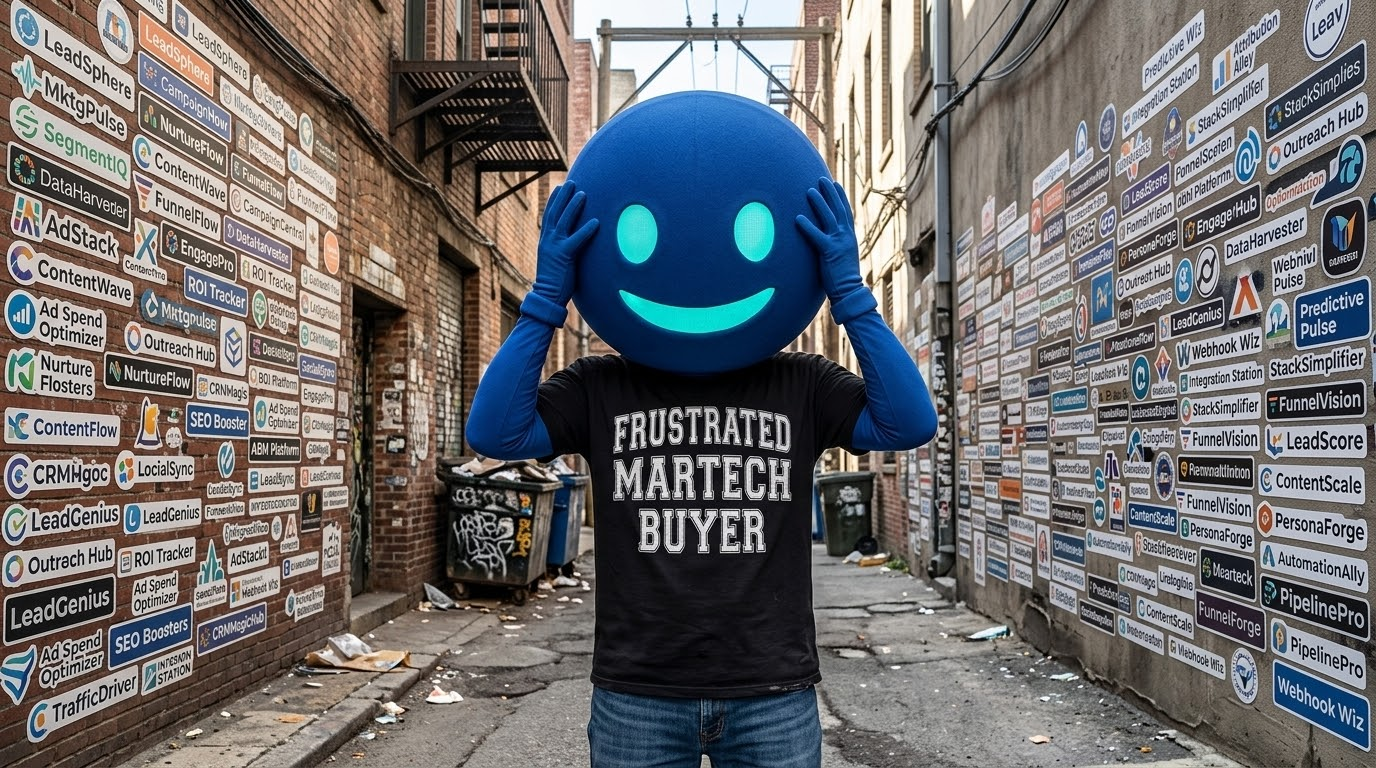
In 2011, according to LUMA Partners, there were roughly 250 companies in the MarTech ecosystem. Today, depending on how you count, there are 15,000 to 20,000 vendors competing for the attention of marketers.
At the same time, the number of Lumascapes, the industry infographics that map these vendors, has exploded from one landscape to more than thirty-five.
In other words, the problem isn’t a lack of innovation.
It’s too much of it.
For marketers trying to find the right solution, the modern MarTech landscape can feel less like a marketplace and more like a maze.
How Most MarTech Searches Actually Start
When a brand begins looking for a new technology solution, the process usually looks something like this:
First, they ask a colleague.
Then they search Google or increasingly GPT.
They read a few listicles.
Maybe they talk to a vendor they met at a trade show.
And then something predictable happens.
The moment they show even the slightest hint of interest, the inbound begins.
Emails.
LinkedIn messages.
Cold calls.
More emails.
Often dozens per day.
Most of it irrelevant.
Most of it automated.
Most of it arriving from vendors operating on a completely different timeline and level of urgency than the buyer.
So what do buyers do?
They retreat.
They do more research on their own, trying to avoid getting pulled into a sales cycle before they’re ready.
Ironically, that independence, which feels productive, can also lead to missed opportunities or the wrong decision.
Because with 20,000 vendors, it’s almost impossible to see the whole landscape.
Vendors Aren’t Happy Either
If you talk to vendors, you’ll hear a different version of the same frustration.
Buyers ghost them.
Sales cycles take forever.
Deals die late in the process.
And sales teams are forced to rely on increasingly aggressive outreach just to get attention.
The result is a strange dynamic where no one actually enjoys the process.
Buyers feel chased.
Vendors feel ignored.
And both sides waste enormous amounts of time.
A Personal Realization
I first noticed this shift during my time at Criteo.
People I had known for years, people who would normally respond to an email, suddenly weren’t replying anymore.
Sometimes it took three or four attempts just to get a response.
At the same time, the sales teams I was managing were struggling with cold outreach.
Response rates were falling.
Everyone was sending more emails, but fewer people were answering them.
That was more than a decade ago.
The situation has only intensified since then.
Today I receive dozens of automated emails every day, most of which have nothing to do with what I actually need.
It’s a numbers game.
And everyone knows it.
Even the Research Process Is Broken
Ironically, even the early research phase, the part buyers try to do independently, can be frustrating.
In my work helping brands evaluate technology vendors, I often have to reach out to companies I’ve never spoken with before.
You would think vendors would make it easy to learn about their product.
But that’s not always the case.
Sometimes I fill out a form and never hear back.
Sometimes it takes multiple attempts.
And when someone finally responds, I’m often routed to an SDR whose first priority is qualifying me rather than answering my questions.
What buyers really want is simple:
They want to quickly understand:
- What a vendor does
- How the product works
- Whether it’s self-service or managed
- The pricing model
- The most common use cases
- Real case studies
- Answers to frequently asked questions
In other words, the basics.
But surprisingly, gathering that basic information can take weeks or months.
The Role of Trust in MarTech Buying
Trust is one of the most important factors in a MarTech decision.
And trust is hard to earn.
Sometimes it comes from relationships.
Sometimes from transparency.
But in many cases, trust begins forming long before the first sales call.
Buyers often start forming opinions during their independent research phase, and a demo simply validates what they already believe.
That’s why traditional sales-led discovery processes are becoming less effective.
Buyers don’t want to be “sold.”
They want to learn on their own first, and then engage with the vendors that seem like the best fit.
What the Ideal Process Should Look Like
Imagine if a marketer could start a search by simply exploring a clear, structured database of vendors.
One place where they could quickly learn:
What each company does.
How their solution works.
What problems it solves.
And whether it might fit their needs.
Instead of spending three to six months gathering basic information, they could narrow their options down to two or three strong candidates in a matter of hours.
Then they could engage those vendors with confidence, knowing they’ve already done their homework.
That’s a much healthier starting point for everyone.
Buyers save time.
Vendors speak with informed prospects.
And conversations move forward faster.
Why We Built Blurbs
This is exactly the problem that led us to build Blurbs.
For years, we kept hearing the same frustration from brands:
Too many vendors.
Too many promises.
Too much time wasted figuring out who actually does what.
Over time, that frustration turned into a broader belief that vendors often over-promise and under-deliver.
And unfortunately, that skepticism affects even the companies that are being completely honest.
We believed the industry needed a better starting point.
Not another review site.
Not another sales funnel.
But a place where buyers could educate themselves quickly and objectively, and vendors could be discovered without relying entirely on cold outreach.
Blurbs helps marketers do what they increasingly prefer to do anyway:
Research independently.
Understand the landscape.
And engage with vendors when they’re actually ready.
A Better Outcome for Everyone
If the MarTech discovery process improves, the benefits extend across the ecosystem.
Brands solve problems faster.
Vendors are discovered more easily.
Agencies can help their clients navigate the landscape more efficiently.
And perhaps most importantly, the relationship between buyers and sellers becomes less adversarial and more collaborative.
Because when both sides begin the conversation informed and aligned, better decisions happen faster.
And in an industry moving as quickly as marketing technology, speed and clarity matter more than ever.